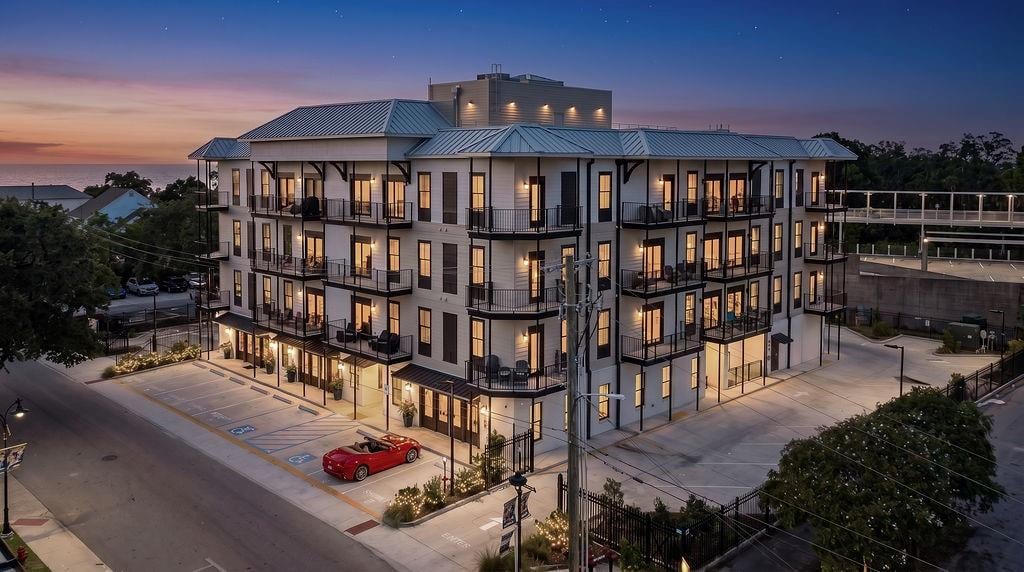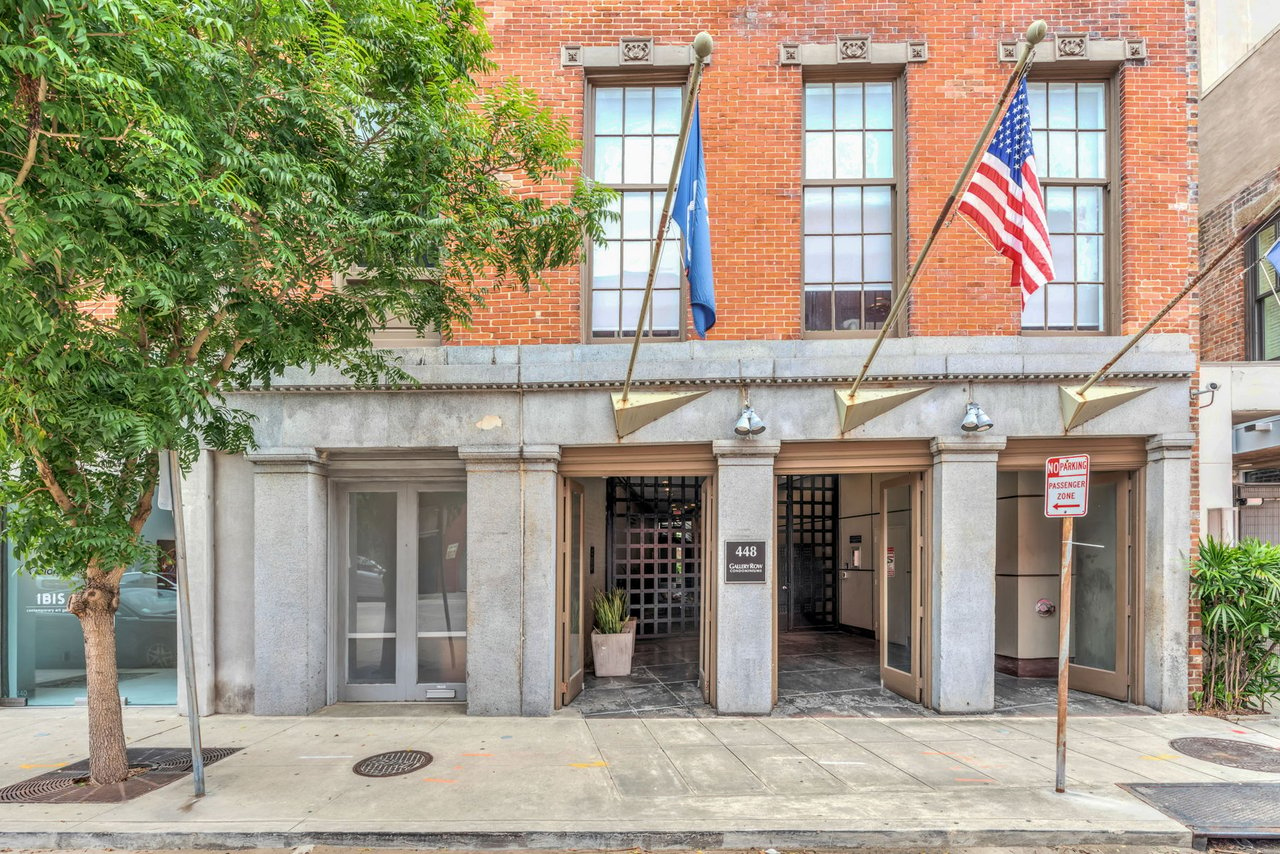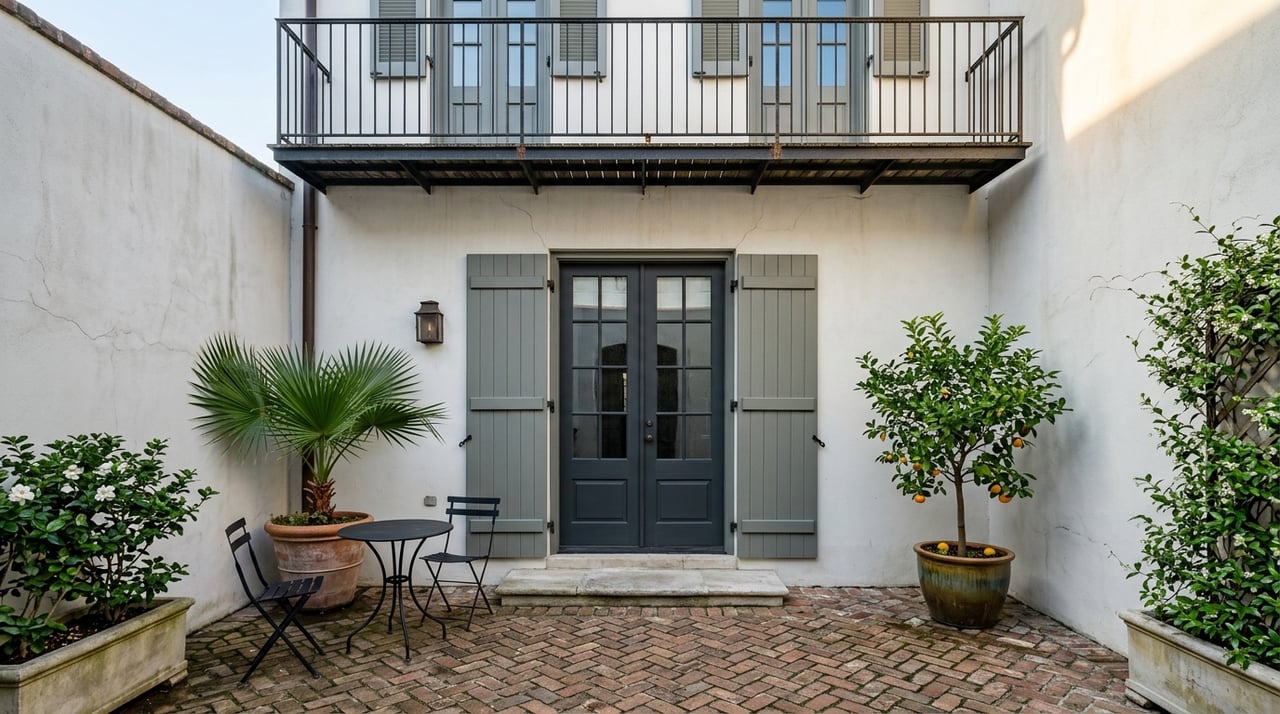
A French Quarter pied-à-terre can feel like a dream: historic architecture, walkable streets, hidden courtyards, and some of New Orleans’ most iconic dining and music just outside your door. But buying in the Quarter is rarely simple, especially if you want a second home that is beautiful, practical, and easy to own. If you are considering a foothold in this historic district, it helps to understand how building form, block-by-block location, ownership costs, and local rules can shape your experience. Let’s dive in.
Understand the French Quarter housing stock
The French Quarter is New Orleans’ oldest neighborhood and an 85-square-block historic district with nearly 4,000 residents. According to the Preservation Resource Center’s French Quarter overview, the area includes Spanish, French, Creole, and American architectural influences, with building types such as Creole cottages, double shotgun houses, galleried townhomes, three-story masonry buildings, and courtyard-oriented layouts.
For many buyers, that means a pied-à-terre here will not look like a typical newer second-home purchase. You are more likely to be choosing from a historic condo, a unit in a multi-use building, or a converted structure with older materials, unusual layouts, and preservation constraints.
Expect character and quirks
Historic properties in the Quarter often offer details that are hard to replicate elsewhere, such as cast-iron balconies, masonry walls, tall doors, and private courtyards. They can also come with practical tradeoffs, including less storage, more stairs, and layouts shaped by centuries-old building traditions rather than modern convenience.
The National Park Service’s overview of the Vieux Carré notes that Creole townhouse layouts often used exterior passageways and stairways instead of interior stairs. During showings, that can affect how easy the home feels for everyday use, especially if you plan to come and go often with luggage, groceries, or guests.
Choose your block carefully
In the French Quarter, micro-location matters. The neighborhood is compact and highly walkable, but the experience can shift quickly from one block to the next.
Street-facing units near the most active entertainment corridors will usually have more foot traffic and energy than units tucked around courtyards or located on quieter residential blocks. If you love the pulse of the Quarter, a balcony or street-facing home may be part of the appeal. If you want a more private retreat, a courtyard-facing unit may offer a calmer everyday experience.
Active blocks versus quieter pockets
The French Quarter is known for nightlife, dining, music venues, and major events. New Orleans & Company’s French Quarter guide highlights Bourbon Street activity, historic restaurants, and a nightlife scene that draws visitors year-round.
The City Planning Commission has also identified the VCE district along eight blocks of Bourbon Street between Iberville Street and St. Ann Street, plus VCE-1 areas on parts of Decatur and North Peters, as especially active sections with concentrations of bars, restaurants, and live entertainment. In practical terms, those areas are often the liveliest and, at night, likely the noisiest.
Balconies and courtyards offer different lifestyles
Balcony units and courtyard units can both be appealing, but they often serve different priorities. Based on French Quarter building patterns described by the National Park Service and Preservation Resource Center, balcony homes tend to maximize views and connection to the street, while courtyard-facing homes often provide more privacy and a quieter outdoor setting.
Neither is automatically better. The right choice depends on whether you picture your pied-à-terre as a front-row seat to city life or a tucked-away retreat within it.
Budget beyond the purchase price
A second home in the French Quarter can come with ownership costs that differ from a primary residence. It is important to understand those costs early so you can evaluate the full picture, not just the asking price.
Property taxes may be higher for a second home
In Orleans Parish, property taxes are based on the parish millage system, and values are reviewed at least once every four years. The Orleans Parish Assessor’s FAQ explains that the homestead exemption applies to a primary residence and removes the first $75,000 of market value from taxation.
Because a pied-à-terre is typically a second home, it usually will not qualify for that exemption. That can materially change your annual carrying costs, so it is worth confirming your expected tax burden before you make an offer.
Condo dues and assessments matter
If you are buying in a condo or another shared building, monthly dues are only part of the story. The National Association of Realtors consumer guide to HOAs notes that condo and HOA fees often cover common-area upkeep, reserves, and long-term improvements, while special assessments may be used for emergency repairs or projects that reserves cannot cover.
In a historic building, reserve strength matters. Older roofs, balconies, drainage systems, masonry, and common elements can be expensive to maintain, so you will want to understand not just the dues, but also the building’s financial preparedness.
Insurance deserves close attention
Flood and storm risk should be reviewed address by address. FEMA states that the Flood Map Service Center is the official source for flood hazard information, and flood insurance may be required in higher-risk zones.
The National Park Service also notes that the French Quarter lies barely above sea level and is subject to flooding and storms. For that reason, insurance quotes should be part of your early due diligence, not something left until the end of the transaction.
Know the historic-property rules
One of the French Quarter’s greatest strengths is its historic character. That same character also comes with regulation.
The City of New Orleans’ Guide to Doing Business explains that Vieux Carré Commission permits are required for exterior alterations, even when the work is not visible from the street. The city’s exempt-work guidance still requires VCC approval for items such as exterior painting, roofs, gutters, downspouts, courtyard paving, and fences.
Small projects may not be simple
If you are used to treating exterior updates as routine maintenance, the French Quarter may require a mindset shift. A window, door, roof, balcony, or courtyard project can involve review and approval before work begins.
That does not mean ownership is difficult. It does mean that stewardship here is more deliberate, and buyers should plan for that reality from day one.
Be realistic about rental use
Many second-home buyers naturally ask whether a pied-à-terre can offset costs through short-term rentals. In the French Quarter, that question needs a very careful answer.
The city’s current short-term rental brochure says Temporary and Accessory Short Term Rentals are allowed anywhere in New Orleans except the French Quarter. A City Planning Commission staff response also states that the VCE district is the only zoning district within the French Quarter that allows Commercial Short Term Rentals.
Do not assume nightly rental income works
For most pied-à-terre buyers, it is safest to assume a nightly rental strategy will not work unless it is confirmed in detail. Any proposed rental use should be checked against the exact zoning district, the building’s use history, condo rules if applicable, and any grandfathered status before you move forward.
The same City Planning Commission material notes that there has been a moratorium on new hotels and bed-and-breakfast uses in the French Quarter since 1969. That makes it especially important to verify facts instead of relying on assumptions or informal seller claims.
Inspect with older buildings in mind
A standard inspection matters in any purchase, but it is especially important in the French Quarter because many buildings are older and exposed to long-term moisture, weather, and wear.
The French Quarter Management District code-enforcement guidance identifies recurring issues such as drainage, roofs, gutters, downspouts, balconies, stairways, decks, porches, and plumbing fixtures. These are not abstract concerns. They are practical items that can shape near-term repair costs and long-term ownership comfort.
Ask for the right documents
Before closing, it is wise to request and review:
- Permit history
- Any open code issues
- Condo rules and bylaws
- Reserve studies
- Insurance summaries
- Vieux Carré Commission correspondence
In this market, it is also smart to look closely at balconies, drainage, roof work, windows, doors, and masonry. These items tend to come up often in both maintenance planning and code enforcement.
Think about day-to-day convenience
A beautiful historic unit still has to work for the way you plan to use it. That is why practical details should carry real weight during tours.
Pay attention to stairs, natural light, storage, outdoor space, and whether the unit sits above active ground-floor uses. A romantic layout can feel very different after several weekend trips if access is awkward or nighttime activity carries into the home.
Do not overlook parking and mobility
If parking matters to you, verify it early. New Orleans & Company notes that the French Quarter is best explored on foot, by pedicab, or by horse and buggy, which reflects how the neighborhood functions day to day.
That charm is part of the appeal, but it also means car storage is not the default. If you expect frequent driving, valet access, dedicated parking, or easy loading and unloading, those details should be confirmed before you fall in love with the architecture.
A smart pied-à-terre starts with the right questions
Buying a French Quarter pied-à-terre is as much about fit as it is about beauty. The best purchase is not always the most dramatic balcony or the most recognizable address. It is the property that aligns with how you actually want to live, visit, and maintain a home in one of America’s most distinct historic districts.
When you approach the search with clear eyes about location, regulation, ownership costs, and building condition, you give yourself a much better chance of finding a place that feels effortless once the keys are in hand. If you are considering a historic condominium or second home in the Quarter, G. Douglas Adams can help you evaluate the details with the care, market context, and transaction guidance these properties deserve.
FAQs
What should you check first when buying a French Quarter pied-à-terre?
- Start with the block, building type, monthly carrying costs, flood-zone information, and whether the unit is street-facing or courtyard-facing.
Does a French Quarter second home qualify for the Orleans Parish homestead exemption?
- No. The Orleans Parish homestead exemption applies to a primary residence, so a pied-à-terre typically does not qualify.
Can you use a French Quarter pied-à-terre as a short-term rental?
- You should not assume so. Rental use must be verified against the exact zoning district, building rules, use history, and any grandfathered status.
What building issues matter most in the French Quarter?
- Older-building concerns like roofs, drainage, gutters, balconies, stairways, masonry, windows, doors, and plumbing fixtures deserve close review.
Are courtyard units better than balcony units in the French Quarter?
- Not necessarily. Courtyard units often offer more privacy and less street exposure, while balcony units may offer stronger views and more connection to the neighborhood’s activity.
Why is local guidance helpful when buying in the French Quarter?
- Historic rules, shared-building finances, inspection priorities, and block-by-block differences can all affect value and livability in ways that are easy to miss without market-specific guidance.