If you own a Bywater shotgun, you already know the charm is in the details. The long room sequence, the woodwork, the porch, and the street-facing form are often the very things that make these homes feel special. The good news is that you do not have to choose between character and comfort. With the right plan, you can modernize how the house lives while preserving what gives it value and identity. Let’s dive in.
Why Bywater renovations need care
Bywater is not just a popular New Orleans neighborhood. It is a locally regulated historic district that was designated in 1993 and includes roughly 120 blocks and more than 2,000 buildings. The district is known for shotguns and Creole cottages, with many single-story, wood-framed homes topped by gabled or hipped roofs.
That context matters when you renovate. In most cases, the strongest results come from keeping the house’s basic form and street presence intact rather than reshaping it to resemble a newer home style. In a neighborhood like Bywater, preservation is not just aesthetic. It is often part of the approval process.
Know when HDLC review applies
Because Bywater is a local historic district, exterior changes can require review by the Historic District Landmarks Commission, or HDLC. The City of New Orleans states that a Certificate of Appropriateness is required before exterior work on a property in a local historic district, and that approval is separate from any building permit you may also need.
That review can apply more broadly than many owners expect. Some maintenance, repair, roofing, and fencing work may need HDLC approval even when a separate building permit would not otherwise be required. Applications are filed online through OneStop, and the property owner is responsible for making sure all required approvals are in place before work begins.
Interior work is generally outside HDLC jurisdiction. Even so, normal building and safety codes still apply, which is why early planning with the right professionals can save time and frustration.
Preserve the features that define a shotgun
Keep the linear floor plan legible
A shotgun house is not just a style. It is also a plan. Preservation guidance identifies the linear room arrangement as a defining feature of the building type, and Louisiana guidance notes that the first rooms in a shotgun-style house must remain unaltered.
That does not mean the house has to function exactly as it did a century ago. It does mean the best renovations usually keep the room-by-room progression readable, especially toward the front of the house. When that sequence stays intact, the home tends to retain more of its architectural identity.
Save original windows and doors when possible
Original windows, doors, transoms, sidelights, trim, and hardware do a lot of visual work in a historic home. HDLC guidance recommends retaining and repairing original windows and keeping serviceable original wood doors and related trim whenever possible.
If replacement becomes necessary, the new elements should closely match the originals in size, shape, configuration, material, and detailing. In practical terms, that often means repair first, replace second.
Respect exterior woodwork and porch details
In many Bywater shotguns, exterior wood siding and trim are part of the home’s historic character and weather protection. HDLC guidance treats this exterior woodwork as review material and discourages visually incompatible substitutes such as vinyl weatherboards.
Porches also matter more than many owners realize. In New Orleans architecture, a porch is often one of the strongest public-facing character features. If porch elements need repair or replacement, details like posts, balustrades, and trim should match the style and character of the house.
Add comfort without losing character
You can make an old shotgun feel better in daily life without stripping away the details that make it memorable. In fact, some of the most effective upgrades are the least visible.
Start with repair and sealing
Drafty windows and doors do not always need to be replaced. HDLC guidance specifically notes that routine maintenance, caulking, glazing, and weather-stripping can reduce drafts and air infiltration.
That kind of work may not be dramatic, but it can improve comfort while preserving original material. It also tends to support a more authentic renovation outcome than replacing historic components too quickly.
Put big changes in secondary spaces
One of the smartest ways to modernize a shotgun is to push major changes toward the rear of the home. Preservation guidance recommends concentrating major alterations in secondary spaces whenever possible so the building’s historic character remains intact.
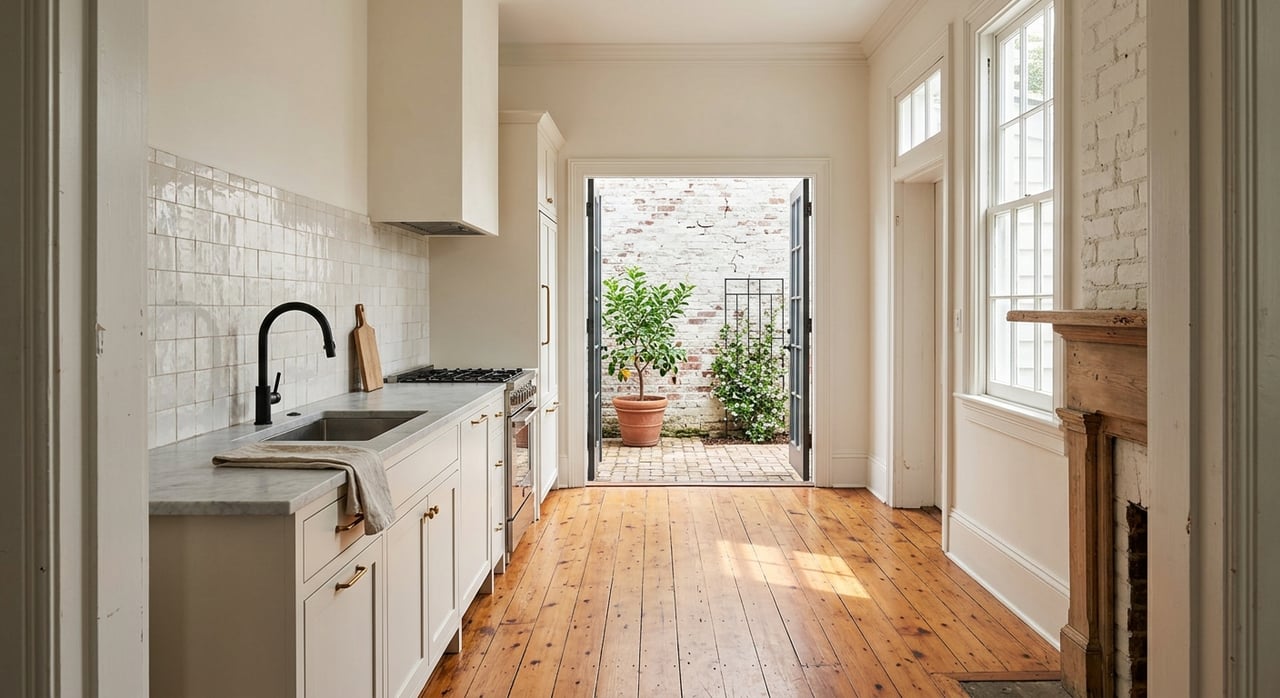
For many owners, that means updating the kitchen, bath, laundry, and storage areas in later rooms rather than dismantling the front of the house. This approach helps the home work for modern life while keeping the original plan visible and understandable.
Upgrade systems with discretion
Comfort today often depends on mechanical systems, but placement matters in a historic district. HDLC guidance states that visible mechanical, electrical, plumbing, and telecommunications equipment, including air-conditioning compressor units, vents, generators, solar panels, and wall-mounted mini-splits, is subject to review when visible from a public way.
The practical takeaway is simple. Keep equipment as discreet as possible, especially on rear or less visible elevations. A thoughtful layout can improve livability without creating visual clutter on the street-facing side of the house.
When an addition makes sense
Sometimes a shotgun needs more space. In Bywater, the best additions are usually the ones that respect the original house rather than compete with it.
HDLC guidance favors subordinate rear or side additions over visible front changes. It specifically identifies camelbacks as traditional additions on wood-framed shotgun and double-shotgun houses, noting that they should be compatible with the existing structure and were traditionally set back at least two rooms from the front elevation.
That guidance gives owners a useful framework. If you need extra square footage, think about additions that stay visually secondary from the street and preserve the original front form of the house.
Choose complementary materials
An addition does not have to be an exact replica to fit. The city’s guidance says visible elements such as walls, roofs, windows, doors, trim, and porches should generally use materials found on surrounding buildings, even when they are not identical.
What matters most is compatibility. Materials should feel at home in the streetscape and should not rely on imitation products that fail to read like the real thing.
Plan for storms and long-term resilience
In New Orleans, comfort and preservation are closely tied to resilience. A well-kept historic house is often better positioned to handle severe weather than one where maintenance has been deferred.
HDLC storm-preparedness guidance notes that New Orleans is vulnerable to high winds and flood waters, and that regular maintenance can reduce damage. The city also points out that elevating building systems can make recovery easier after a storm.
Roof care is especially important. The same guidance says well-maintained properties can better resist storm damage, while deteriorated roof conditions increase vulnerability. For a Bywater shotgun, roof repair, flashing, guttering, and water management are not side issues. They are central to protecting both comfort and historic fabric.
If you are planning around flood risk, verify the exact property address through the official FEMA flood mapping system before making assumptions about flood zone, insurance needs, or elevation strategy. In a neighborhood with varied conditions, parcel-specific information matters.
Build the right team early
A successful Bywater renovation usually begins before drawings are finalized and before construction starts. The city recommends early consultation with HDLC staff, and preservation guidance supports working with qualified professionals who understand historic buildings and review standards.
That often means choosing a contractor, architect, or designer with direct experience in local historic-district work. The process tends to go more smoothly when your team understands what should be preserved, what can be adapted, and how approvals fit into the timeline.
For buyers and sellers of heritage properties, that same local knowledge matters in the transaction itself. A house with historic character often deserves both careful evaluation and a presentation strategy that understands provenance, architecture, and the realities of renovation.
What this means for Bywater owners
The best Bywater shotgun renovations rarely try to erase the home’s age. Instead, they work with it. They keep the street-facing form, preserve the front rooms and key details, place heavier changes in secondary spaces, and improve comfort through repair, careful system placement, and practical resilience planning.
That kind of renovation does more than make a house easier to live in. It protects the qualities that make the property distinctive in the first place. In a neighborhood where architecture carries real weight, stewardship is often the smartest design choice you can make.
If you are considering buying, selling, or renovating a heritage property in Bywater, G. Douglas Adams offers thoughtful guidance shaped by deep experience with architecturally significant homes, elevated marketing, and pragmatic transaction strategy.
FAQs
What should you preserve first in a Bywater shotgun renovation?
- Start with character-defining features such as the linear floor plan, front rooms, original windows and doors, wood siding and trim, and porch details whenever they are still repairable.
Does exterior work on a Bywater shotgun need HDLC approval?
- Exterior work in the Bywater Historic District can require a Certificate of Appropriateness from the HDLC before work begins, and some maintenance, roofing, repair, and fencing projects may also need review.
Where should modern kitchen and bath updates go in a shotgun house?
- The most preservation-friendly approach is usually to place kitchen, bath, laundry, and storage improvements toward the rear or in secondary spaces so the historic room sequence remains legible.
Can you add square footage to a Bywater shotgun home?
- Yes, but city guidance generally favors subordinate rear or side additions over front-facing changes, and traditional camelback additions should remain compatible with the original house and set back from the front.
How can you improve comfort without changing historic character?
- Focus on lower-visibility upgrades such as caulking, glazing, weather-stripping, careful system placement, roof maintenance, and water management before replacing original features.
What should Bywater homeowners know about storm planning for historic homes?
- Regular maintenance, strong roof and gutter upkeep, and thoughtful placement or elevation of building systems can improve resilience, while permanent visible storm-related modifications may require HDLC review.