Ever wonder why some downtown homes feel bigger than their square footage suggests? In the Warehouse District, the answer often has nothing to do with what is inside your loft and everything to do with what is waiting just outside the front door. If you are considering a move to this part of New Orleans, understanding the neighborhood’s daily rhythm can help you judge value, fit, and long-term appeal. Let’s dive in.
Warehouse District character
The Warehouse District is not a master-planned neighborhood trying to look historic. It is a real historic district shaped by port commerce, industrial buildings, and later reinvention into one of downtown New Orleans’ most distinctive residential areas. City materials describe a district bounded by Magazine Street, Lafayette and Constance Streets, Poydras Street, Convention Center Boulevard, and the Expressway.
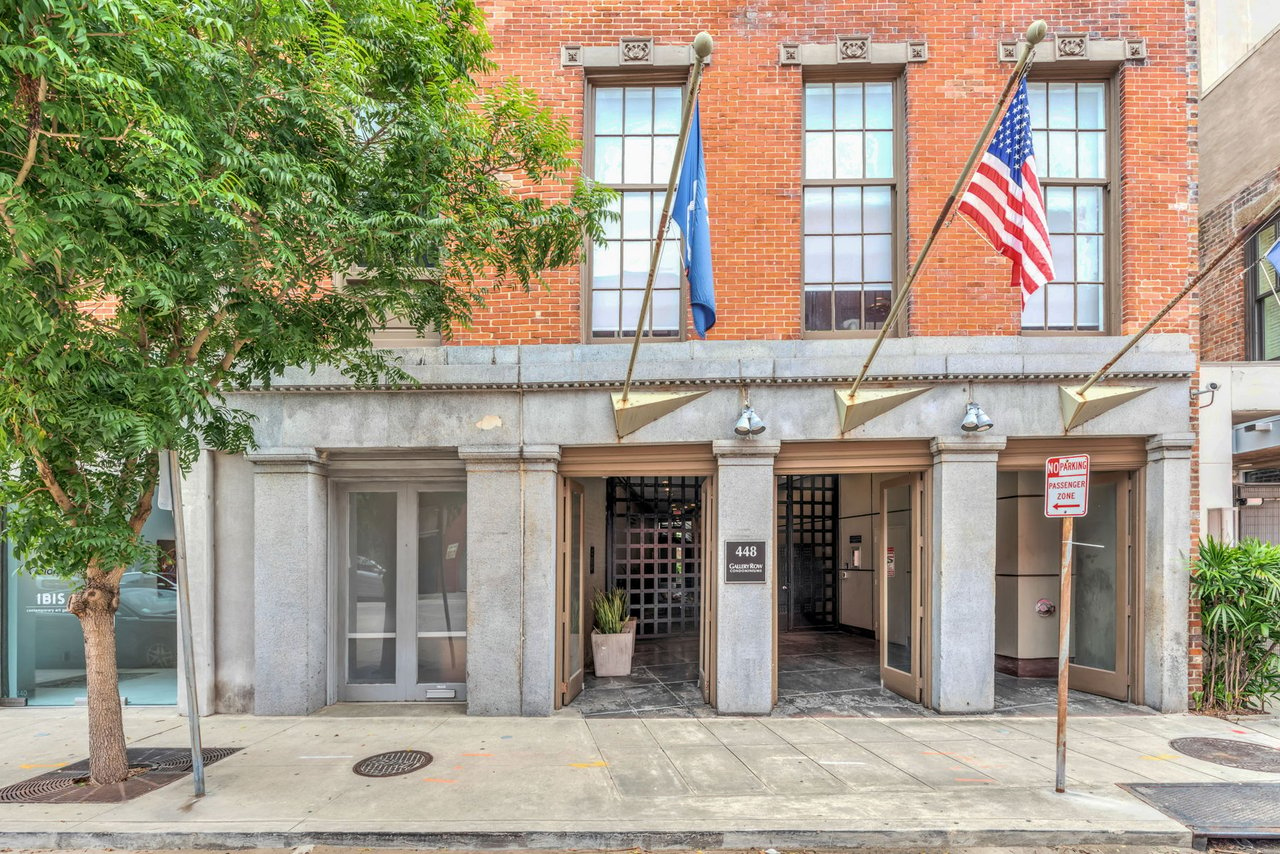
That history still shows up in the streetscape. Many buildings date to the 19th century, often rising three to four stories and sitting directly on the sidewalk with no front-yard setback. Former warehouses and commercial buildings have been converted into residential spaces, which helps explain why loft and condo living here feels different from newer downtown construction.
Adaptive reuse is central to the area’s identity. The Federal Fibre Mills, originally a 1907 rope factory, is noted by Downtown New Orleans as the first condo development in the Warehouse District and an important catalyst in the neighborhood’s revival. That kind of story matters because in this district, architecture is not just a backdrop. It is part of the value.
Life beyond your building
Living here means your home extends into the neighborhood. The Warehouse District is tied closely to the arts, museums, dining, and downtown convenience, so the experience of living here often includes a strong sense of movement and activity beyond your own walls.
Arts District New Orleans describes the area as a hub for professionals and creatives, with galleries, museums, performance spaces, bars, and restaurants woven into daily life. That makes the neighborhood feel less like a row of isolated buildings and more like an active urban setting where culture is built into the weekly routine.
One of the clearest examples is the First Saturday Gallery Openings around Julia Street. According to Arts District New Orleans, these monthly evenings can include 18 participating galleries within walking distance, with free receptions in the early evening. For residents, that means a recurring neighborhood tradition rather than a once-a-year special event.
Large annual events add another layer. Arts District New Orleans also sponsors Jammin’ on Julia, White Linen Night, and Art for Arts’ Sake, with White Linen Night drawing major crowds. If you enjoy energy, foot traffic, and a visible cultural calendar, that can be part of the appeal.
Museums and cultural anchors
The Warehouse District has several institutions that shape its identity year-round. The city’s neighborhood guide highlights the Ogden Museum of Southern Art, the Contemporary Arts Center, and the National WWII Museum as major anchors within the area.
The National WWII Museum is located in the Historic Warehouse District on Andrew Higgins Drive between Magazine and Camp Streets. The Contemporary Arts Center has long served as a focal point for the Warehouse Arts District. Together, these institutions help give the neighborhood a steady cultural presence that goes beyond nightlife or weekend traffic.
For buyers, that matters because landmark institutions can strengthen a neighborhood’s identity over time. They help define how the district is experienced by both residents and visitors, and they contribute to the sense that this is a place with substance as well as style.
Dining and daily convenience
The Warehouse District is also known for its food and drink scene. New Orleans & Company describes the area as home to award-winning restaurants, chic bistros, casual sandwich spots, wine bars, and hotel cocktail lounges.
That variety supports a lifestyle many urban buyers want. You may not need a long car trip to reach dinner, drinks, or a casual meeting place. Instead, a large part of your social routine can happen close to home, which is one reason walkable downtown neighborhoods continue to attract attention.
The location also helps. New Orleans & Company notes that the district is only about a five-minute cab ride from the French Quarter or CBD. The Outlet Collection at Riverwalk also places the Warehouse District within walking distance of the convention center, the French Quarter, the CBD, and the riverfront retail and restaurant area.
Walkability and practical tradeoffs
Walkability is a major part of the neighborhood’s value, but it comes with practical questions you should weigh carefully. City preservation materials note that the district’s street and site design predated off-street parking, which remains a meaningful detail for condo buyers today.
In simple terms, the neighborhood was not built around modern suburban expectations. Buildings often sit right at the lot line, and parking solutions can vary a lot from one building to another. If you are comparing properties, parking access, storage, building entry, and day-to-day convenience deserve just as much attention as finishes and ceiling height.
This is where a good building-level comparison matters. Two lofts with similar square footage can live very differently depending on whether one includes easier parking, a more polished common area experience, or a location closer to your preferred museums, dining spots, or event corridors.
What buyers should know now
The Warehouse District offers a distinctive downtown lifestyle, and current market numbers suggest buyers have room to evaluate options carefully. Realtor.com’s May 2026 neighborhood snapshot shows 84 homes for sale, 50 homes for rent, a median listing price of $299,000, a median rent of $2,000, and median days on market of 58.
That same snapshot classifies the Warehouse District as a buyer’s market. It also reports that homes sold for about asking price on average in May 2026. For you as a buyer, that can mean more opportunity to compare building quality, location, and condition without rushing simply because a loft has exposed brick or a strong aesthetic.
There is also an interesting pricing angle. Realtor.com places the Warehouse District below several nearby downtown submarkets by median listing price, including the French Quarter and CBD at $429,000, the Central Business District at $470,000, and the Lower Garden District at $345,900. That may make the area feel like a comparatively accessible entry point into central downtown living.
Why certain lofts stand out
Not every Warehouse District property performs the same way. Year over year, Realtor.com shows the median listing price down 12.06% and median days on market down 23.68%, which points to a market that remains active but selective.
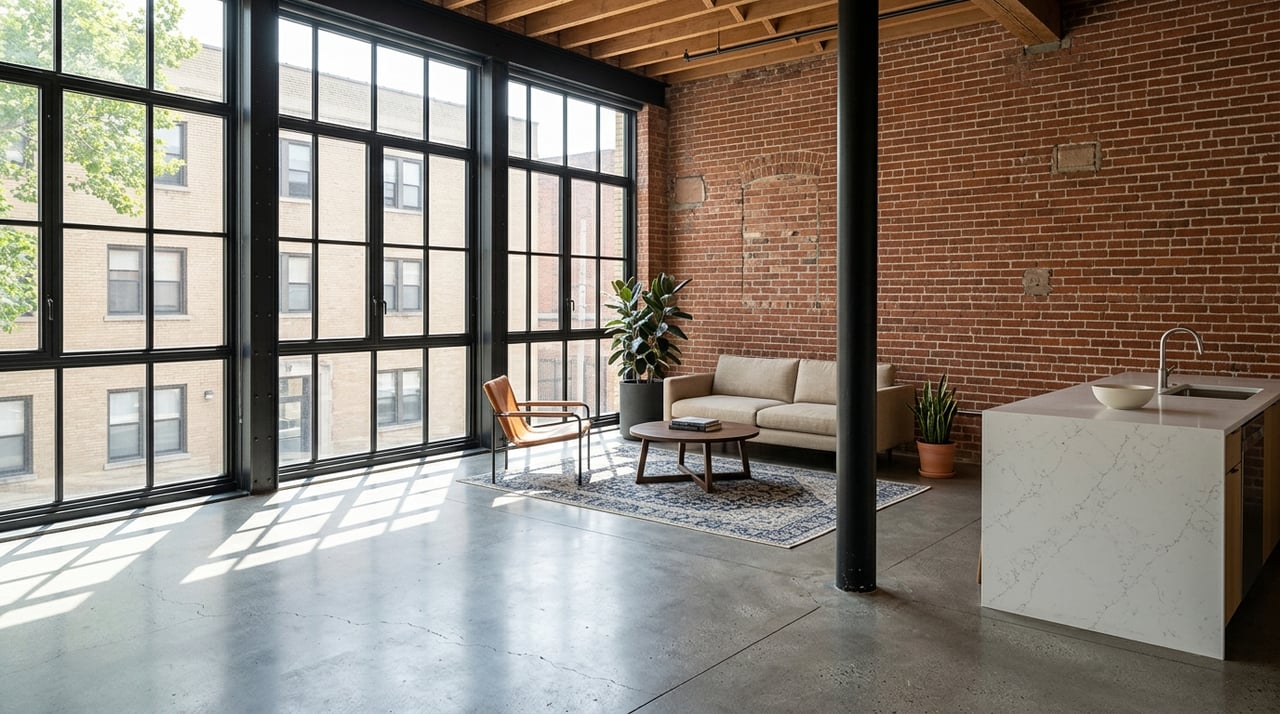
That selectivity tends to reward the right combination of product and presentation. In a neighborhood known for converted warehouses and historic commercial buildings, unit condition, natural light, layout, building character, and everyday livability can make a meaningful difference.
There is also a supply story underneath the surface. Because the district’s historic fabric is defined by existing low-rise warehouse buildings and many have already been adapted for residential use, authentic loft inventory is limited by the built environment itself. Well-renovated units with strong character and practical convenience can stand apart more clearly when buyers compare options.
What sellers should focus on
If you are selling in the Warehouse District, the lifestyle story matters just as much as the interior photography. Buyers are not only choosing countertops, floorplans, and finishes. They are also choosing gallery walks, museum access, downtown convenience, and the experience of living in a historic urban district.
That means presentation should connect the home to the neighborhood’s broader identity. A property with architectural provenance, clean visual marketing, and a clear narrative about location, building history, and daily lifestyle is often easier for buyers to understand and remember.
Pricing discipline matters too. In a buyer-friendly market, loft appeal alone may not overcome dated condition, weaker building amenities, or an unrealistic asking strategy. Sellers benefit from thoughtful preparation, strong visuals, and a market position that reflects how today’s buyers are actually comparing downtown options.
Why the neighborhood keeps its pull
The Warehouse District continues to attract attention because it offers more than a single property type or design trend. It combines historic architecture, cultural institutions, restaurant density, and central location in a way that feels distinctly New Orleans.
For some buyers, the appeal is the authenticity of converted industrial buildings. For others, it is the ability to walk to galleries, museums, and dinner without giving up the texture of a historic setting. For sellers, that enduring mix of character and convenience is a real strength, especially when it is presented with clarity and care.
If you are weighing a purchase or preparing a sale in the Warehouse District, it helps to work with someone who understands both the story of the neighborhood and the details that shape value from one building to the next. To schedule a private consultation, connect with G. Douglas Adams.
FAQs
What is the Warehouse District in New Orleans known for?
- The Warehouse District is known for its historic warehouse architecture, converted lofts and condos, galleries, museums, restaurants, and close connection to downtown and the riverfront.
What is daily life like in the Warehouse District for residents?
- Daily life in the Warehouse District often includes walkable access to dining, galleries, museums, and recurring arts events such as First Saturday Gallery Openings around Julia Street.
What should buyers consider when purchasing a Warehouse District condo?
- Buyers should compare not just style and square footage, but also parking, building convenience, location within the district, and how well a unit’s condition and layout support everyday living.
Is the Warehouse District a buyer’s market right now?
- Realtor.com’s May 2026 snapshot classifies the Warehouse District as a buyer’s market, with 84 homes for sale, a median listing price of $299,000, and median days on market of 58.
Why do some Warehouse District lofts hold stronger appeal?
- Lofts can stand out because authentic warehouse-style inventory is shaped by a limited historic building stock, so well-renovated units with strong character and practical livability often attract more attention.